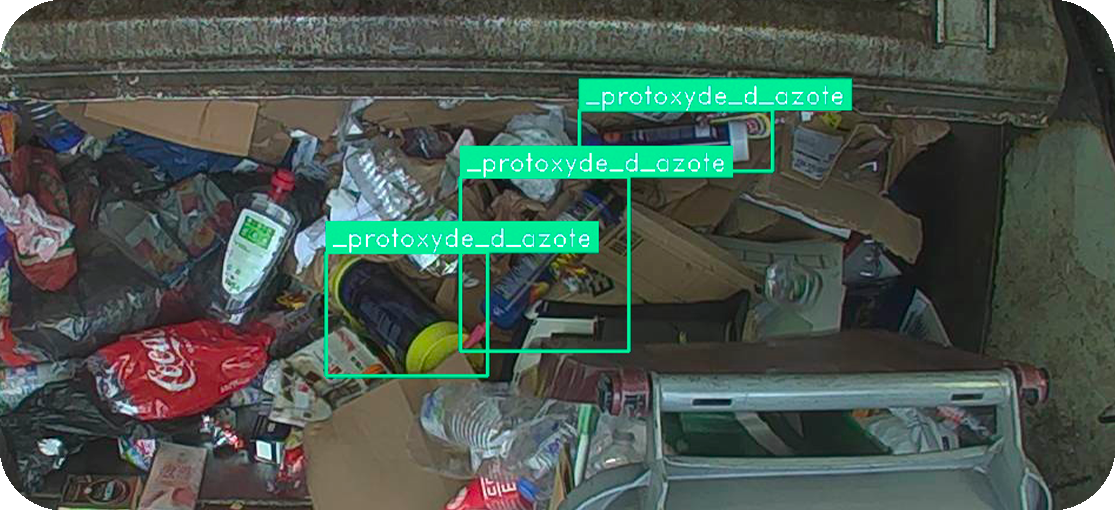
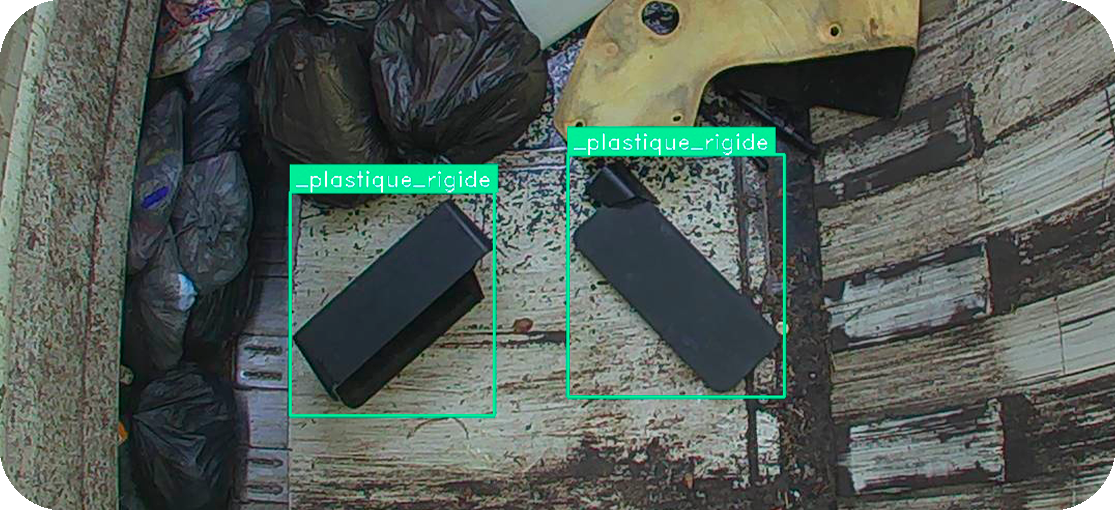
More than 80 types of waste are detected by Lixo's artificial intelligence. These identifications enable a comprehensive analysis of the waste collected during collection rounds.


Identified waste
With its new Omnia model, the Lixo solution can characterize waste and its variations. For example, the AI considers that a thick cardboard box is different from an oversize cardboard box or a cardboard box.
Depending on the type of rounds you run, the waste and its variations can be customized and adjusted to best match your sorting rules.

Black bag small
Bulky, opaque and small green bag
Pink bag bulky, opaque and small
Small, opaque, bulky yellow bag
Blue bag bulky, opaque and small
White bag bulky, opaque and small
Other bags bulky, opaque and small :
supermarket or plastic
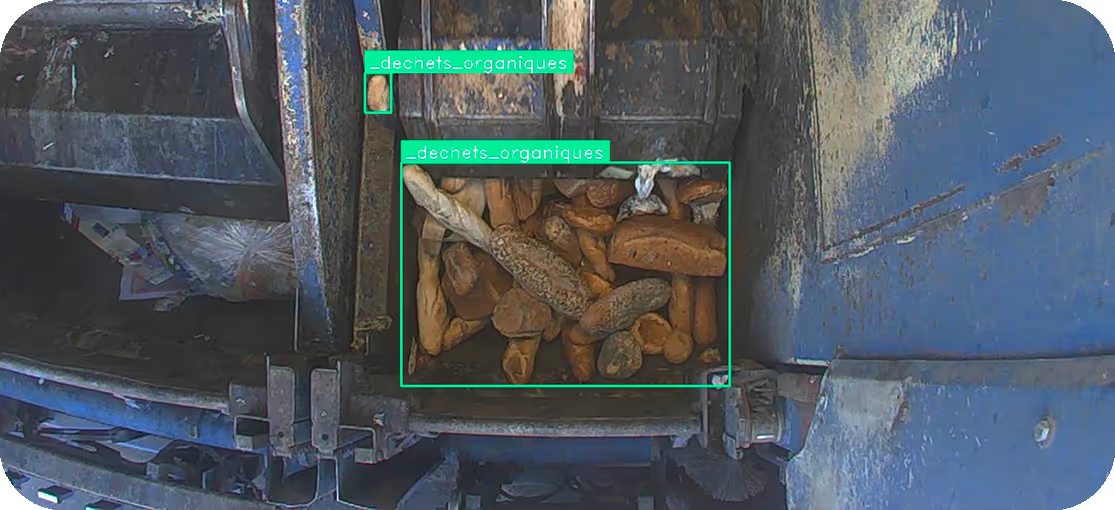
Organic waste, bulky food waste and small items
Large and small garden waste:
lawn, branches, leaves
Large and small expanded polystyrene
Rigid plastic large and small flower pot, coat hanger,
bucket, watering can, crate
Bulky and small plastic film
Other bulky and small plastic packaging: yoghurt pots, plastic caps, plastic trays, cups,
aluminium foil, orange mesh bags
Plastic bottles: jars, plastic containers

Metal packaging : cans, food cans,
steel or aluminium aerosols
Food cartons: milk, juice and soup cartons
Thick , bulky and small cardboard: corrugated cardboard, pizza boxes,
egg cartons, unsuitable for 240-litre garbage cans
Small paper
Glass

Nitrous oxide bottle
Layer
DASRI bags: infectious waste
Surgical mask
Shoe
Large and small textiles: clothing, carpets, tablecloths, gloves, socks, eyeglass wipes
Other bulky and small items: cutlery, cigarette butts, corks, bulky items
Large and small wood: crate , plank

Small, bulky non-recyclable metal packaging: nails, utensils, saucepans, rims, license plates, sheet steel, metal bars, clothes racks
Bulky and small non-recyclable paper: tissues, receipts, wallpaper, paper towels, sanitary napkins
Bulky furniture: indoor and outdoor, home textiles
Bulky construction waste: insulation materials, mineral waste, rubble, plaster
Painting materials small brushes, silicone tubes, putty tubes, paint pots
Cables and ropes large and small rope, elastic, straps
Consult our documentation for a complete list of identified waste.
Download our documentation with a complete list of identified waste items.
_FAQ
The Lixo solution has been designed with great flexibility to adapt to a variety of waste collection tipper models. Thanks to its modular design and advanced technology, Lixo can be efficiently integrated into all types of vehicles used in the waste collection sector.
Whether rear-loading, side-loading, including PàP, PAV, single and dual compartment configurations, Lixo is designed to connect quickly and offer optimum functionality. Our technical team works closely with OEMs and local authorities to ensure smooth and efficient integration with their existing vehicle fleets, minimizing operational disruption.
In addition, our commitment to research and development enables us to remain at the forefront of innovation, continually exploring new opportunities to broaden the solution's compatibility with future waste collection truck models that may be introduced to the market.
Installing a Lixo sensor on a skip is a methodical and efficient process. Our technical team closely guides each step to ensure integration in less than 6 hours. It all starts with a preliminary assessment of the skip to determine the best location for the sensor. Once this location has been chosen, our technicians securely mount the sensor on the skip, ensuring that it is firmly positioned to withstand vibration and environmental conditions. Next, the necessary electrical connections are made to enable communication between the sensor and the Lixo box.
After hardware installation, our team moves on to the software configuration stage. This involves linking the sensor to the Lixo network, ensuring that the data collected will be transmitted reliably and securely. Once the configuration is complete, rigorous tests are carried out to ensure that the sensor functions correctly and transmits the data accurately.
Our installation procedure has been optimized to ensure that the collection trucks are immobilized as little as possible for our users. We strive to minimize operational interruptions during installation and provide clear instructions for ongoing sensor maintenance. What's more, our operations department is always on hand to answer questions and solve any problems that may arise, guaranteeing optimum use of the Lixo solution on every skip fitted. Some customers also wish to run the installation themselves. In this case, we provide them with the technical documentation they need to carry out the installation themselves.
The Lixo solution is equipped with computer vision technology that enables it to detect a wide variety of contaminants during the collection phase. Commonly identified contaminants include the main materials: recyclable waste, household waste and biowaste. In all these categories, a wide range of waste materials can be detected by the artificial intelligence algorithms: black bags, gray bags, expanded polystyrene, oversize cardboard, textiles, green waste, glass, DASRI, wood, bulky items, plastic bottles, metal packaging, gas and nitrous oxide cylinders.
This list is regularly updated in line with developments made by our engineering teams. Thanks to its advanced sensors and built-in artificial intelligence, Lixo can analyze in real time items that should not be in the skip, depending on the type of round being carried out. This detection capability brings tangible data to collection operators and municipalities to improve sorting quality, reduce waste stream contamination and reinforce sustainable waste management practices. The flexibility of the Lixo solution also enables its detection parameters to be adjusted to the specific needs of each customer, making it a versatile tool for improving sorting and collection processes.
Absolutely, the data displayed on the Lixo solution's dashboards is in real time. Thanks to our technology and rapid communication between the sensors installed on the skips and the calculator, information is transmitted instantaneously, reflecting current waste collection conditions.
The dashboards provide a live view of collection activities, contamination rates, operational performance and other relevant indicators. This real-time functionality enables teams to make more accurate decisions, identify potential problems as soon as they arise, and adjust operations accordingly. This is an invaluable advantage for optimizing waste collection, improving sorting quality and boosting the overall efficiency of the collection service.
No, updates and new features to the Lixo solution are totally free. We believe in the continuous evolution of our technology to offer our customers the best possible experience while meeting their growing challenges. As such, software updates to improve functionality, add new detection capabilities or report new indicators are included in our commitment to our customers.
We strive to ensure that the use of the Lixo solution remains up to date and benefits from the latest technological advances without generating additional costs. It is by maintaining a state-of-the-art solution that far-reaching changes can be made to improve waste management and enable you to achieve your operational and environmental objectives.