Awareness-Raising: How Can You Maximize the Impact of Your On-the-Ground Initiatives Through Data Activation?
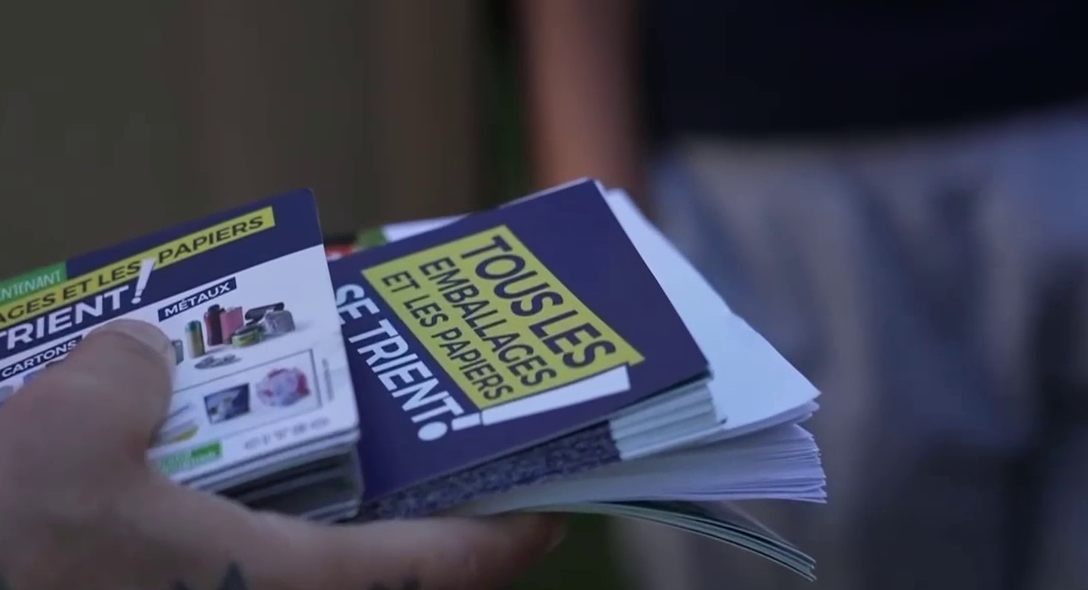
Every year, local governments and unions devote considerable human and financial resources to helping citizens improve their waste sorting practices. Information guides distributed to every mailbox, municipal poster campaigns, and tours by waste sorting and prevention ambassadors: the educational effort is ongoing and costly.
However, on the ground, the picture remains mixed: sorting errors persist, performance in some sectors has plateaued, and it remains difficult to assess what impact these campaigns actually have on users’ daily behavior.
The problem is that most awareness campaigns still rely on broad, undifferentiated messaging. To make waste sorting a lasting habit across all your waste streams, it’s time to scale up: shift from passive mass awareness campaigns to hyper-targeted, data-driven support.
Why "Blind" Awareness Has Its Limitations
Most waste management departments now have access to detailed analyses of the quality of their collection. The problem is no longer the ability to identify a contaminant, but rather the speed and accuracy with which that information is translated into action in the field.
Three factors continue to hinder the effectiveness of traditional campaigns:
- Lack of targeted messaging: Distributing a generic flyer throughout an entire municipality raises awareness among those who already follow best practices, but fails to address the specific needs of areas where sorting errors are a recurring problem.
- Administrative bottlenecks: When a problem is identified in a neighborhood, staff must cross-reference Excel files, draft emails, and plan interventions using manual methods. As a result, the data becomes outdated, delays increase, and action comes too late.
- Field workers lacking context: Sending waste sorting and prevention ambassadors into the field without providing them with detailed information about the specific area or locations (major historical contaminants, supporting photos, etc.) limits the impact of their educational message on users.
To maximize the effectiveness of your resources, the strategic challenge lies in creating seamless digital continuity between data analysis and civic action.
Step 1: Move from assessment to targeted action with just one click
To maximize the impact of your waste prevention teams, the first rule is to focus human resources where the quality of sorting is deteriorating the most.
Thanks to modern waste collection analysis interfaces, “hot spots” can be identified immediately. By viewing the data by street, address, zone, or priority, you can see which areas have high rates of repeat violations in just a few seconds.
Data activation begins as soon as you can convert this finding into an operational assignment without switching interfaces: with a single click, the relevant area is locked to schedule a pre-filled field operation.
Step 2: Provide evidence-based, community-focused education
Once an operation is launched, communication with the field must be immediate. The days of paper forms and time-consuming preparatory work in the office are over.
To ensure that the efforts of your recycling and waste prevention ambassadors (permanent staff, temporary employees, or external contractors) bring about a lasting change in recycling behavior, two key factors are essential:
- Direct, seamless access via a mobile app: Agents receive their assignments, schedules, routes, and operational details directly on their mobile app as soon as a sorting error is detected.
- An approach based on specific facts: by viewing the data overview for their area on their phone, officers get a concise and accurate analysis of the indicators for that sector. They tailor their outreach to the specific realities of the neighborhood rather than reciting general guidelines.
Key Takeaway: To roll out this method across all your teams without straining your budget, choose a mobile tool that doesn’t require a license fee per agent. For example, the Lixo mobile app is completely free.
Step 3: Automate citizen communication in the area
While direct interaction in the field remains irreplaceable, field workers cannot speak individually with every household in a large area. To maximize the impact of a field visit, targeted written communication is an essential complement.
Rather than going through a cumbersome administrative process (extracting contact databases, manual formatting, and outsourcing direct mail), data activation allows you to generate personalized letters directly from the action form:
- Choosing a letter template based on the industry's focus
- Automatic customization of the message based on the data in the field
- Instant generation of mail pieces ready for mailing to all households in the relevant area
By combining the ambassadors' presence with a targeted informational letter, the message's credibility is strengthened, and waste sorting practices improve more quickly.
Step 4: Verify the adoption of the recycling practice through impact measurement
A modern awareness-raising campaign does not end with field visits or the distribution of mail; it must measure the actual effectiveness of the initiative.
Without follow-up measurements, it is impossible to know whether the sorting habit has taken root in the long term or whether new mistakes are reoccurring. It is also this lack of quantifiable data that makes it difficult to justify prevention budgets to management and elected officials.
To bring things full circle:
- Assessment of the collection quality score 2 months before the procedure
- Deployment of recycling ambassadors and mailing of targeted letters
- Automatic comparison of results 60 days after the procedure (2 months later)
This provides you with objective data demonstrating changes in the quality score and the tangible value of your awareness campaigns.
Improving the quality of data collection requires going beyond mere observation to place data at the heart of daily operations. With the launch of the “Field Actions” feature, Lixo transforms your analyses into an immediate operational tool. You’re no longer limited to observing anomalies on a screen: with a single click, you can trigger targeted assignments for your ambassadors, equip them with precise facts to share, and automate the sending of informational letters to households in the affected neighborhood.
Now is the time to take your prevention campaigns to the next level and establish best practices in your community for the long term.
.jpg)