Grand Besançon Métropole (GBM) is establishing itself as a pioneer in waste management. Faced with an increase in sorting errors, the local authority has rolled out an innovative solution based on artificial intelligence to improve its performance. The aim is to improve the quality of sorting, reduce costs, and enhance the safety and efficiency of its employees.
The observation: costly and dangerous sorting errors
Despite exemplary results in reducing residual household waste, Greater Besançon Métropole faced a major challenge: the quality of recyclable waste sorting. In 2024, sorting errors in bins accounted for 27.1% of the total weight of recyclable waste, meaning that more than one in four items of waste was incorrectly sorted, equivalent to 3,500 tons per year. The consequences of these errors are significant:
- Additional costs: An additional cost of €1.147 million for processing unsorted waste in 2024 (+17% compared to 2023).
- Safety risks, with four fires starting in collection bins due to lithium batteries.
- Insufficient effectiveness of corrective actions taken, with institutional communications and interventions in collective habitats.
Recognizing the limitations of traditional awareness campaigns, GBM chose to integrate cutting-edge technology into its collection system.

The Error Detection System (EDS): a technological innovation
To meet this challenge, GBM has launched a major initiative: the Error Detection System (SDE). Developed in partnership with the Sulo Group and based on Lixo's image analysis technology, this system harnesses the power of artificial intelligence.
How does it work?
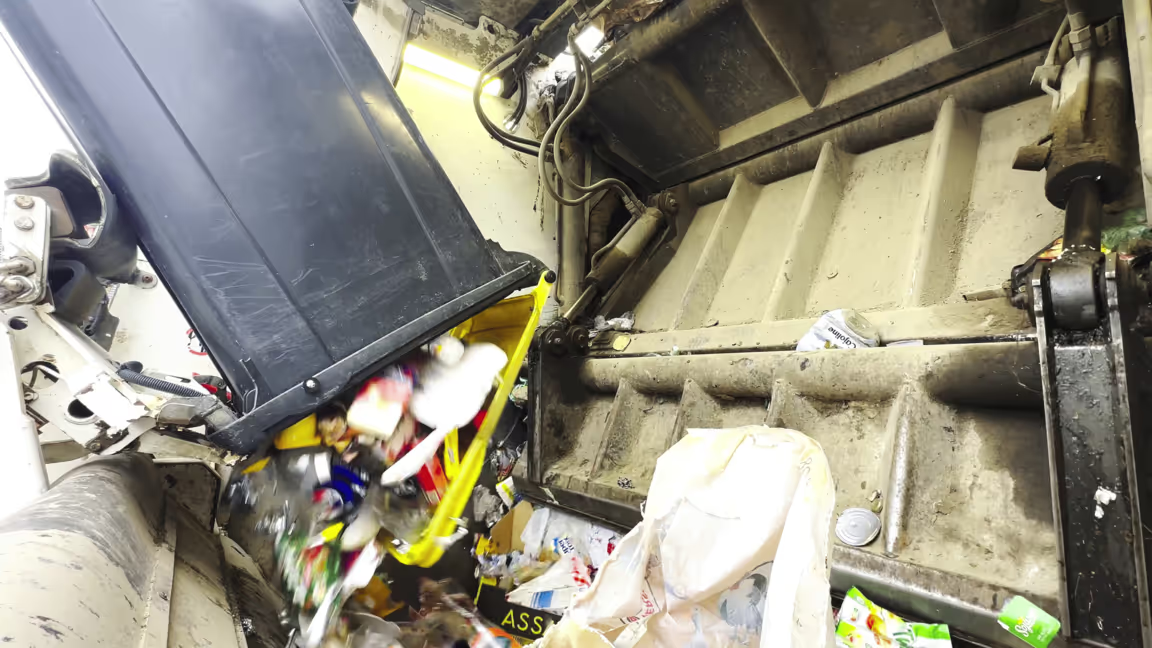
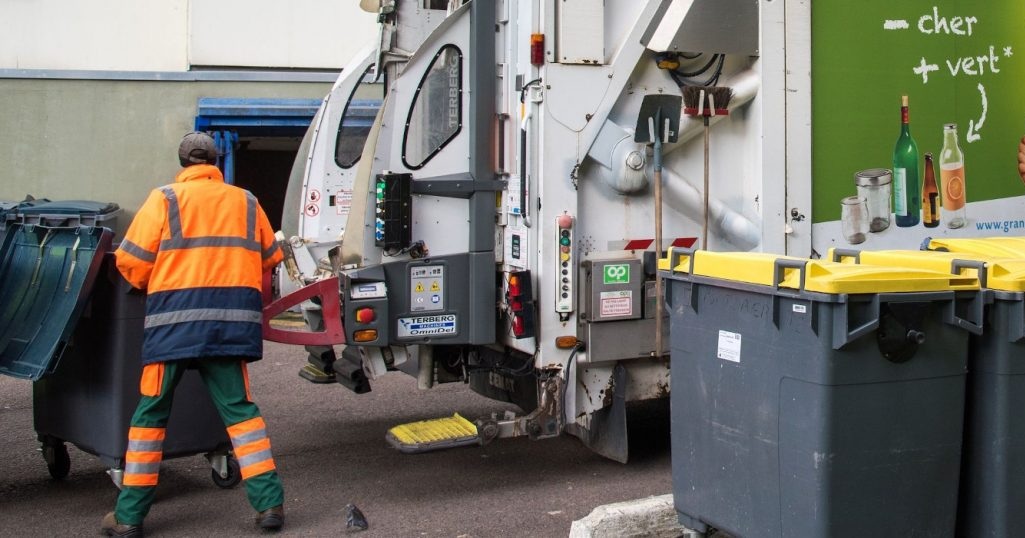
The principle is both simple and effective. Each sorting bin is equipped with an RFID chip, allowing it to be identified. During collection, cameras installed in the trucks take images of the contents of the bins as they are emptied. These images are then analyzed in real time by algorithms capable of identifying the most common errors.
The experiment, launched in September 2024 on eight trucks, has already analyzed tens of thousands of bins, providing an accurate map of sorting practices.
Initial results show that 76% of errors come from closed bags; 12% from unidentifiable objects and 7% from glass.
Accurate data for effective action
One of the major advantages of the SDE is its ability to provide highly accurate data on sorting quality, enabling a shift from mass communication to targeted, personalized awareness-raising.
Analyze to act more effectively
In concrete terms, the SDE enables:
- Identify priority areas. Data can be used to map the areas where errors occur most frequently. Where errors occur most frequently.
- Classify errors (closed bags, glass, hazardous waste, etc.)
- Segment by user type: individuals, social landlords, businesses, or associations.
Analyses show, for example, that 85% of the most polluted bins belong to private individuals, while more than half of social housing bins are contaminated. These data now guide the work of waste sorting ambassadors in the field.
Incentive fees as a lever
This approach is in line with GBM's proactive policy, which introduced incentive-based fees in 2012. This system, in which billing is partly linked to the weight and number of household waste bin collections, has strongly encouraged waste reduction at source. The SDE complements this system by focusing on improving the quality of waste sorting.
This project is a continuation of the incentive fee introduced by GBM in 2012. This system, which links billing to the weight and number of household waste bin collections, has already significantly reduced waste at source.
The SDE complements this approach by improving the quality of sorting.

Towards widespread adoption of the system
The initial results are encouraging: less than 4% of bins show signs of significant contamination. This means that by focusing efforts on a minority of users, the city can significantly improve the overall quality of waste sorting.
The next step will be to engage in individualized dialogue with the households concerned, through educational letters or field visits.
If the results are confirmed, the system could be extended to the entire collection fleet.
By leveraging innovative technologies such as artificial intelligence, Grand Besançon Métropole is not only modernizing its waste management, but also reaffirming its commitment to a sustainable city, where every piece of waste is considered a potential resource.